Storm Damage to Trees: What to Do After a Pacific Northwest Wind Storm
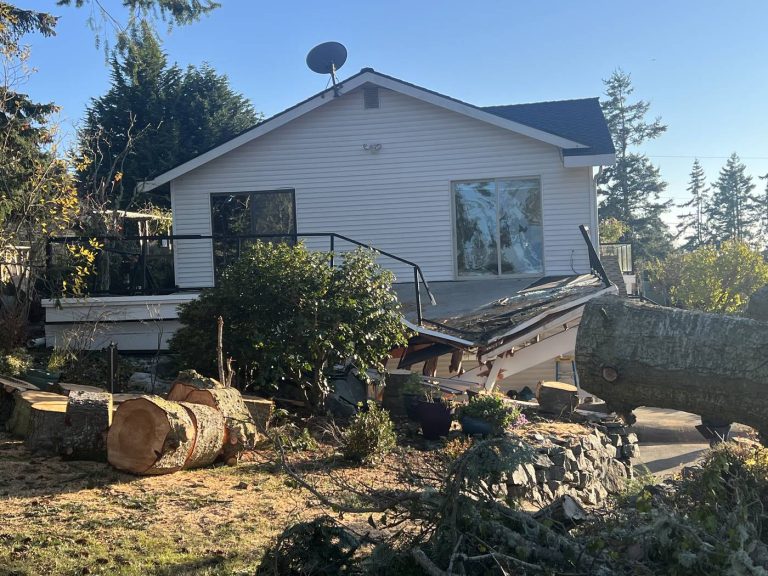
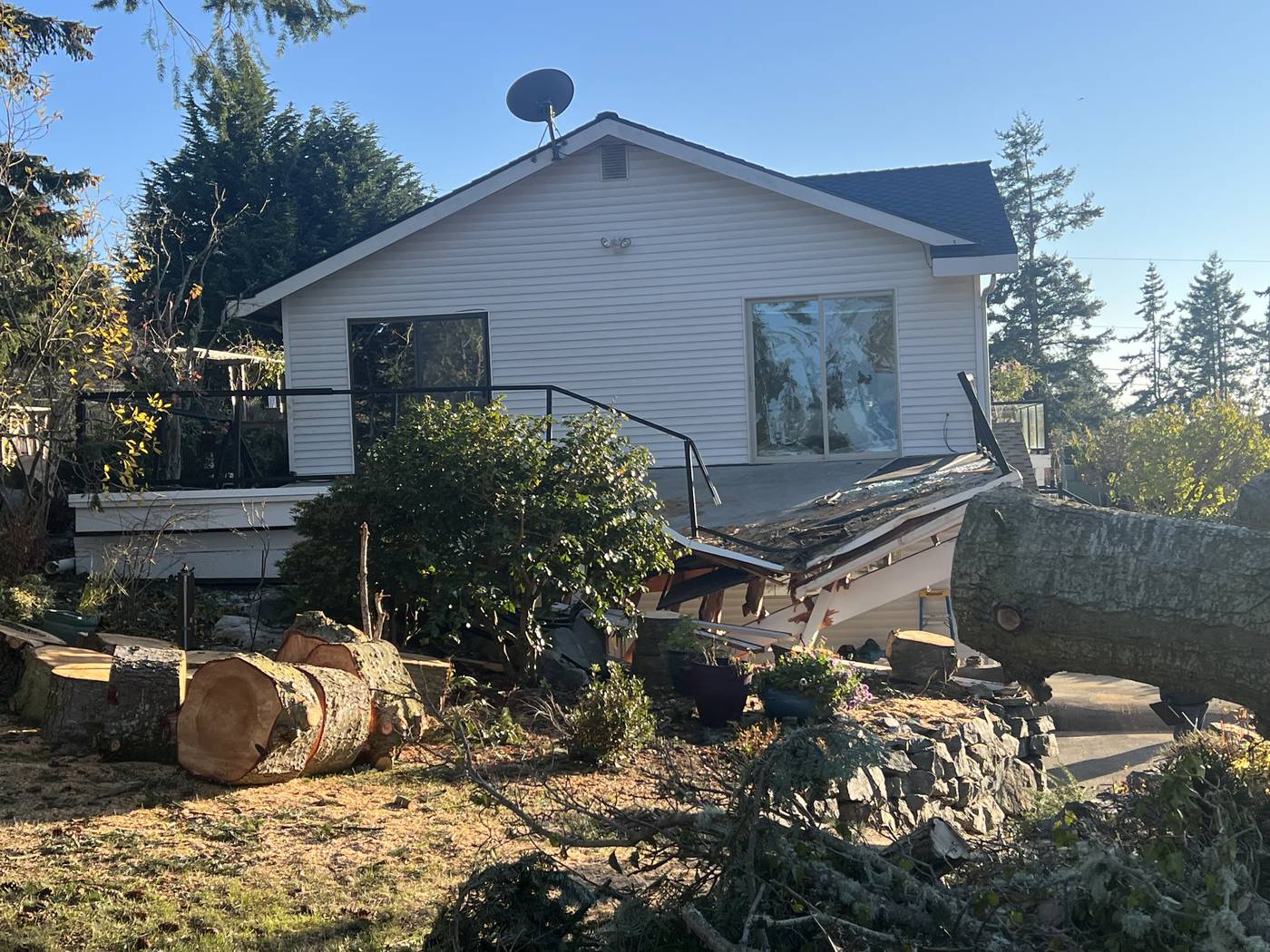
When a Pacific Northwest wind storm rolls through Pierce, Skagit or Snohomish County, the morning after usually looks the same: branches across the lawn, a fence flattened somewhere, and maybe a big fir or cottonwood that’s leaning a little more than it did yesterday. Most storm damage isn’t a tree through the roof. It’s the quieter stuff, and that’s exactly the kind that gets ignored until the next storm finishes the job.
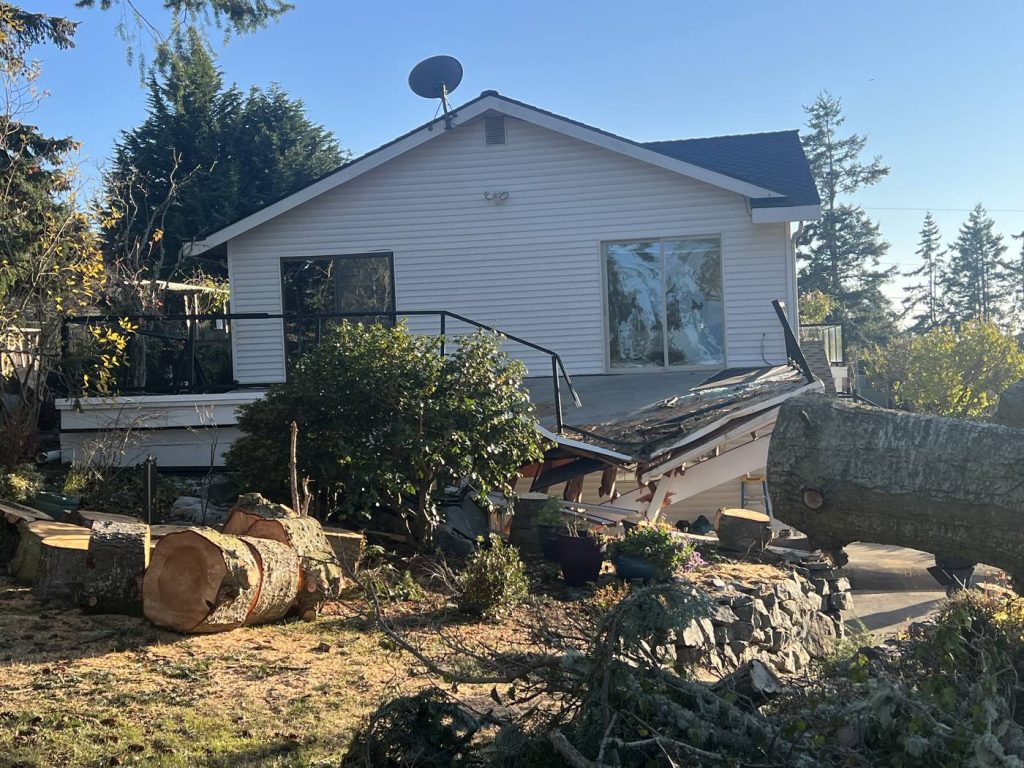
Here’s how homeowners can sort out what they’re looking at, what’s safe to handle themselves, and when it’s time to call a crew. If a tree is down on a house, a car or a driveway right now, skip the reading and call or text Baxter’s Tree Service at (360) 503-0571. We take emergency calls 24/7.
First: safety before cleanup
Wait until the wind has actually died down before you go out. Branches that are cracked but still hanging can drop hours after a storm.
When you do go out:
- Look up before you walk under anything. Broken limbs hung up in the canopy are easy to miss from the ground.
- Treat any downed or sagging power line as live. Stay well back and call your electric utility. If anyone is hurt or there’s a fire, call 911. Trees touching energized lines are the utility’s job first.
- Keep kids and pets inside until you’ve walked the yard.
Walk the yard and sort the damage
Not all storm damage is equal. Walk your property in daylight and put what you find into one of three buckets.
Small stuff you can probably handle
- Twigs and small branches on the ground, away from power lines
- Limbs you can pick up and move without a saw
- Debris in gutters you can reach safely from the ground or a short, stable ladder
Stuff that needs a closer look
- A tree that’s leaning more than it used to, especially toward the house, shop or driveway
- Cracked, heaved or lifted soil at the base of a tree, often on the side opposite the lean. Western Washington soils get saturated in fall and winter, and wet ground lets root plates shift.
- Split trunks or a crack at a fork where two big stems meet
- Hanging limbs (“widowmakers”) caught in the branches above
- Limbs that broke and left long, torn stubs
- Bark peeled off in strips or missing on one side
Stuff that’s an emergency
- A tree or big limb on a house, shop, vehicle or fence
- A tree blocking your only way in or out
- A tree that fell partway and is hung up on another tree or a structure
- Anything tangled with a power line (call the utility first)
For anything in the second or third bucket, call or text us at (360) 503-0571. Want a professional opinion on whether a damaged tree can stay? Certified arborist available through our partner.
Why you shouldn’t cut storm-damaged trees yourself
A healthy tree on a calm day is predictable. A storm-damaged one isn’t. Trunks and limbs that are bent, pinned under other wood or twisted are loaded like a spring. Cut in the wrong spot and that energy releases all at once, sometimes toward the person holding the saw. Trees resting on a roof can also shift and drop further as weight comes off.
If a limb or trunk is under tension, off the ground, or bigger than you’d be comfortable dropping on a calm day, leave it for a professional crew.
Insurance: what to know before you call your agent
Washington’s Office of the Insurance Commissioner (OIC) has a plain-English page on winter weather claims. A few points from it that matter after a storm:
- Homeowner policies usually cover damage from wind and falling trees. If a tree hits your home, call your insurer or agent as soon as you can.
- Document first. Take photos or video of the damage. If it’s safe, take steps to limit more damage, like tarping a roof or covering a broken window.
- Hold off on permanent repairs until your insurer has seen the property and you’ve agreed on the repairs.
- Save every receipt, including for temporary fixes like tarps and plywood.
- Tree removal and cleanup usually aren’t covered unless the tree fell on your home, garage, car or another covered item. A tree that just fell across the lawn is often on you.
- If a neighbor’s tree falls on your house, your own insurer will often pay, and you’d pay your deductible.
The OIC also notes that filing a claim can affect your premium, so for smaller damage some people choose to pay out of pocket. Every policy is different, so ask your agent. (WA OIC: winter weather and insurance)
Hire a registered contractor
After big storms, people show up door to door offering to clear trees. The OIC recommends making sure anyone you hire to work on your home is registered with the state. You can look up any Washington contractor on the L&I Verify a Contractor page. Baxter’s Excavation & Tree Removal, LLC is registered with WA L&I as contractor #BAXTEET811JA.
What we do after a storm
Baxter’s Tree Service is based in Burlington, WA and has been in business for 11 years. After a storm we can:
- Remove fallen and storm-damaged trees. We plan the cuts so the load comes off safely, then move the heavy wood with the equipment we bring to the job.
- Chip the limbs and brush on site.
- Grind the stumps once things calm down, so you can replant or re-seed.
- Clear storm-damaged brush and small trees on larger lots.
We’ll also be straight with you about what your job needs. Some removals over a house need a crane, and trees tangled in power lines need the utility first. If that’s your situation, we’ll tell you on the phone and plan for it.
We work across Pierce, Skagit and Snohomish counties, including Roy and Graham in Pierce County and Burlington, Mount Vernon and Sedro-Woolley in Skagit County. See our hazard tree removal and insurance-claim help and emergency storm tree service pages for more.
Get ready for the next one
Storm season in Northwest Washington runs through winter, so the best time to deal with a weak tree is before the next wind event:
- Walk the yard and note every tree that could reach your house, shop or driveway if it fell.
- Watch the trees you flagged after each storm. Changes in lean or soil are the warning signs.
- Take “before” photos of your house and yard for insurance.
- Save (360) 503-0571 in your phone now, so you’re not searching for it at 2 a.m. with no power.
Storm damage? Call (360) 503-0571
Whether it’s a tree on the roof or one that’s starting to lean, call or text Baxter’s Tree Service at (360) 503-0571 for 24/7 emergency service in Pierce, Skagit and Snohomish counties.
Baxter’s Excavation & Tree Removal, LLC · Burlington, WA · WA L&I contractor #BAXTEET811JA
Text us