
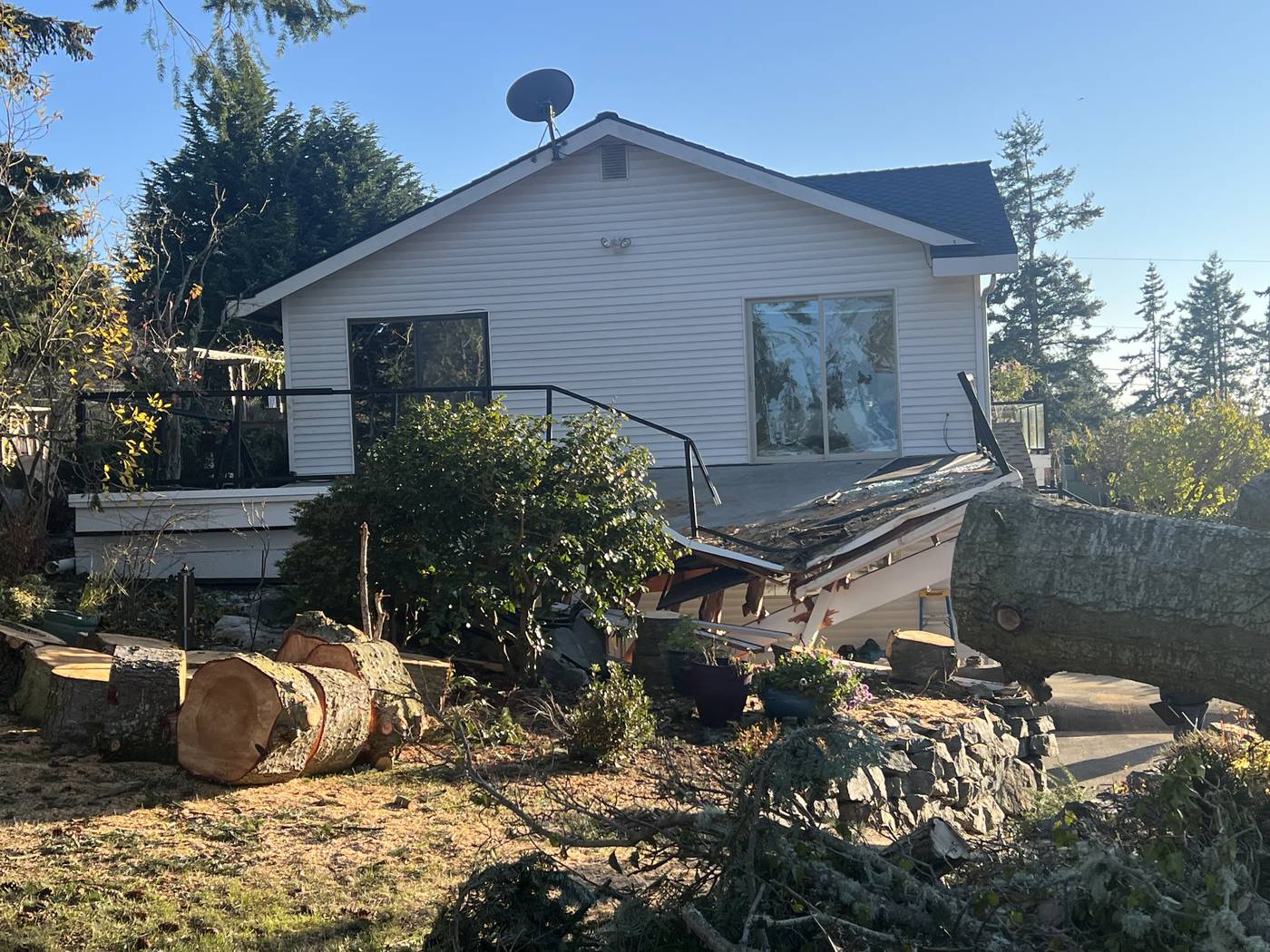
A Tree Came Down in the Storm. Now What? Emergency Tree Removal in Skagit County
Fall and winter in Northwest Washington bring wind storms, saturated ground and heavy, wet snow. Put those together and big Douglas firs, alders and cottonwoods that looked fine all summer can split, lean or come down. It happens fast, usually at night or in the middle of a storm, and it happens across Skagit County: in Burlington, Mount Vernon, Sedro-Woolley and out toward Anacortes.
If a tree is down on your property right now, here’s what to do, in order. If it’s an emergency, call Baxter’s Tree Service at (360) 503-0571. We take emergency calls 24/7.
Step 1: Get people clear and stay away from power lines
Before anything else, get everyone, including pets, away from the tree and anything it’s resting on. A tree leaning on a roof, a shop or another tree is under load and can shift without warning.
If a power line is down, touching the tree, or tangled in the branches, treat it as live. Stay well back, keep others away, and call your electric utility first. If anyone is hurt or there’s a fire, call 911. Trees in contact with energized lines are a job for the utility’s crews. A tree service shouldn’t be cutting there until the utility says the line is safe.
Step 2: Photograph everything (if it’s safe)
From a safe distance, take wide shots of the tree and the house, then close-ups of the damage: the roof, gutters, fence, vehicle or whatever it hit. Get the stump or root plate too, if you can see it. Write down the time it happened.
Washington’s Office of the Insurance Commissioner advises homeowners to call their insurer or agent as soon as possible after a tree falls on their home, to take photos or video of the damage, and not to make permanent repairs until the insurer has seen the property. Keep receipts for temporary fixes like tarps. (WA OIC: winter weather and insurance)
The OIC also notes that homeowner policies usually don’t cover tree removal and cleanup unless the tree fell on a covered structure like your house, garage or car. Every policy is different, so ask your agent what yours covers.
Step 3: Don’t cut it yourself
It’s tempting to grab the chainsaw, especially if the tree is “just” across the driveway. But storm-damaged trees are unpredictable. Trunks and limbs that are bent, pinned or twisted store a lot of energy, and the wrong cut can release it all at once, toward you or toward the house. A tree lying on a roof can also drop deeper as it’s cut.
Leave the cutting to a professional crew.
Step 4: Call us at (360) 503-0571
When you call, tell us:
- Where you are, including the town and the nearest cross street
- What the tree hit: house, roof, vehicle, fence, driveway, or open ground
- Whether anyone is hurt or a power line is involved (if so, call 911 and the utility first)
- Roughly how big the tree is and what kind, if you know
We’ll talk through what’s safe to do until the crew gets there. Then we’ll plan the removal.
How emergency tree removal works
Every storm job is different, but most follow the same order:
- Look before cutting. We walk the site, check for hazards and work out how the tree is loaded and which way each piece will move.
- Take the weight off. Limbs and sections get cut in a planned order so the load comes off safely.
- Get it on the ground and move it. Our skid steer with a grapple and our log loader truck handle the heavy wood.
- Chip the brush. Our wood chipper turns limbs and branches into chips on site.
- Deal with the stump, if you want. Once things settle down, we can grind the stump with our stump grinder so you can replant, re-seed or build over it.
We’ll tell you up front if a tree needs equipment we don’t run. For example, some removals over a house need a crane, and some trees tangled near utility lines need a bucket truck and the utility’s involvement. If that’s your job, we’ll say so on the phone rather than show up unprepared.
What about trees that haven’t fallen yet?
After a storm, many calls aren’t about a tree that’s down, but one that’s about to be. Watch for:
- A tree that’s suddenly leaning more than it used to
- Cracked or lifted soil around the base, especially on the side away from the lean
- Split trunks or large hanging limbs (“widowmakers”) caught in the canopy
- Mushrooms or soft, punky wood at the base, which can mean decay
- Big limbs that broke and left long, torn stubs
If you’re worried about a tree near your home, call us. Certified arborist available through our partner.
Serving Skagit, Whatcom, Snohomish and Island counties
Baxter’s Tree Service is based in Burlington, WA and has 20+ years of experience. We handle emergency and planned tree removal, stump grinding, land clearing and forestry mulching across:
- Skagit County: Burlington, Mount Vernon, Sedro-Woolley, Anacortes, La Conner, Concrete
- Whatcom County: Bellingham, Ferndale, Lynden, Blaine, Everson
- Snohomish County: Everett, Marysville, Arlington, Stanwood, Lake Stevens, Snohomish, Monroe
- Island County: Whidbey and Camano islands
Before the next storm: a quick checklist
- Walk your property and note any tree within reach of your house, shop or driveway.
- Look for the warning signs above, especially after a wet stretch when the ground is soft.
- Save our number in your phone now: (360) 503-0571.
- Know where your utility’s outage line is posted.
- Take a few “before” photos of your house and yard. They help if you ever need to file a claim.
Tree down? Call (360) 503-0571
Storm damage doesn’t wait for business hours, and neither do we. Call Baxter’s Tree Service at (360) 503-0571, 24/7, for emergency tree removal anywhere in our Skagit, Whatcom, Snohomish and Island County service area.
Baxter’s Excavation & Tree Removal, LLC · Burlington, WA · WA L&I contractor #BAXTEET811JA